Friday, July 9, 2010

Succession


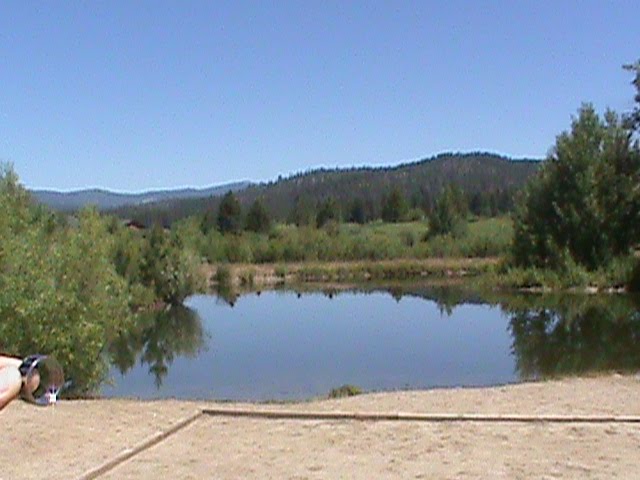
Succession is a term used to describe how a community evolves over time. There are two types of succession, primary and secondary. The photo above is of primary succession. It starts out as rocks then evolves into small plants to grasses to pines and eventually larger and larger trees. There wasn't a fire or a different disaster so it is not secondary succession. Fires, earthquakes, hurricanes are secondary. Primary is where no life turns into a increasing amount of life. It is like a sequence of events over a period of hundreds of years, like the after effects of a volcano erupting.

Genetically Modified Organism


The photo above is of two tomatoes, which have been genetically modified to last longer. An advantage is that the food does not rot and it makes the lives of farmers a lot easier. A disadvantage is that they used to have antibiotic resistance, the essence of the tomato gets changed. Corn and soy products are other examples of these organisms.

Lichen


Lichen is a type of fungus and algae that is typically found on trees. The green blobs on the tree in the photo above are lichen. Lichen tends to grow in places where plant cannot grow, like on the tree bark in the above photo. Types of lichen include fruticose, foliose, and crustose lichen.

Sporophyte


The photo above is of a pine tree, a type of conifer. Since pine trees release pine cones, spores, the tree is considered to be a sporophyte. This happens through meiosis. Other examples include club mosses and ferns.

Endosperm


Endosperm is a type of tissue that surrounds the seed in plants. The photo above is of corn. What humans know of as corn is an example of endosperm, there are tiny seeds within each corn kernel. This endosperm provides nutrients like starch, oil, and protein to the seed, it acts like an embryo. This is an example of edible endosperm! Wheat and barley have endosperm that made common products like bread and beer. It is very useful.

Sunday, June 27, 2010

Glycogen


This kind of scary looking tortoise and rabbit are eating grass that will soon become glycogen. Glycogen is a polysaccharide (carbohydrate) that is stored in the liver and muscles of animals. When the time arrives, this glycogen will get converted to glucose. Glucose can also be found in protein filled animal products.

ATP


ATP is the "energy currency" of cells. Basically, ATP is an energy source for important functions inside the cell. For example, in the post below, ATP was vital for the calvin cycle. The photo above is of a flower, a flower that is going through the calvin cycle and therefore using ATP. ATP is used as an energy source. ATP is used in both animals and plants.

Calvin Cycle


The calvin cycle is when carbon dioxide is added to "RuBP" to form a two 3 carbon molecule called 3-phosphoglycerate. By using ATP and NADPH (now ADP and NADP+), 3phosphoglycerate forms into glyceraldehyde-3-phosphate (glucose). To make the story short, the calvin cycle is one part of the photosynthesis cycle. The photo above is a picture of a plant that is in the sunlight. By using the sunlight stimulation and the carbon dioxide around, the plant is continually going through the calvin cycle. Any plant is an example of the product of the Calvin Cycle.

Phloem


Phloem is a part of the plant that transports sugar (sap) to all parts of the tree. The photo above shows a part of a plant, the bark. Beneath the bark is phloem (next is the cambium and xylem). Examples of phleom are everywhere in a rainforest or a jungle.

Lipid Uses for Energy Storage


Lipids are organic molecules that are insoluble in water and consist of what we know as "fat". The photo above is olive oil, a key example of a lipid. Since lipids are not soluble in water, this is why olive oil dressing has separations within the liquid. Cream, grease, animal oil are all lipids.

Mollusks


Mollusks are a phylum that contain a wide variety of organisms. The photo above is of snails, a gastropod. Gastropods are the most diverse section within the phylum of mollusks. Snails are invertebrate and have shells, a typical characteristic of mollusks. Clams and oysters are also mollusks.

Thorn of a Plant


In the photo above, the sharp purple section of the plant is the thorn of the plant. This thorn protects the plant from herbivores. Thorns are modified stems of this plant, as shown above.

Cambium


In woody plants, vascular cambium is between the xylem and the phloem. There is also another region, cork cambium. This is between the cork and the phloem. This picture is a tree that was opened in my attempt to expose the cambium. Cambium is tricky to see since it is squished between other layers. In the picture, on the low center of the picture, the cambium is in that area. Cambium is living, it has nutrients and helps the growth of the plant (it produces xylem and phloem).

Auxin Producing Area of a Plant


Auxin is a plant hormone in the stem tip. This plant hormone causes the plant to form leaves, it causes the plant to exhibit photo tropism, and it causes it to form other important functions. The photo above shows the tip of the stem, where auxin is produced. The leaves formed and the movement of the plant would be different if auxin was not present. Auxin is at the stem tip so it can be found at the top or on the different sides of a plant, it does not have to be limited to one area. All leafy plants have this hormone.

Friday, June 25, 2010

Protein (fibrous or globular)


The photo above is of hair, an example of Keratin. Keratin is a type of fibrous protein, a protein that repeats and repeats. Fibrous proteins have "only primary and secondary structures" that with the insolubility and elongation make up this type of protein. Hair, nails, hooves are all examples of Keratin.

Long-day Plant


A long-day plant is a plant the does not need a lot of hours of darkness. These plants tend to thrive in the summer (when the days are long). The photo above is of lettuce, an example of a long-day plant. This lettuce head was once sitting on the fields of California, enjoying the hot California sun. Wheat, barley, turnip, and carnations are all long day.

Vestigial Structures


Vestigial structures are structures that do not serve a purpose, yet are still there. The photo above is of my ear, an ear with muscles that are vestigial. Monkeys have muscles in their ears that help them listen for predators. In humans, these muscles have no function for some reason. Therefore, they are vestigial. The human tailbone is another example, along with the appendix.

Unicellular Organism


Unicellular organisms have one cell (as the name hints at). The photo above shows a picture of bread, bread that contains yeast. Yeast is an example of a unicellular organism since it is a eukaryote ( a division of unicellular organisms). Bacteria and viruses are also unicellular.

Wednesday, June 23, 2010

Population


A population is where specific organisms gather and live. The photo above are giraffes that make up the giraffe population in the Oakland Zoo. All of the giraffes are in a certain area, they live together in harmony. Population is everywhere, the school has its own population of over two thousand students.

Protostomes


Protosomes are organisms that have their mouth formed before the anus. Within this group are arthropods, of which include spiders. This terrifyingly spooky spider is a protosome, an organism that has a "mouth first". Nematodes and mollusks can also fit into this category.